
Plenty of people take melatonin, fall asleep on schedule, and still wake up feeling like they never actually rested. If that sounds familiar, DSIP for sleep is worth understanding as a genuinely different mechanism, not just another supplement swap. Delta Sleep-Inducing Peptide, shortened to DSIP, is a naturally occurring nonapeptide that works through brain circuits largely separate from the circadian machinery melatonin depends on. Instead of signaling what time it is, DSIP appears to act on the systems that determine how deep and how continuous your sleep actually is. For readers whose complaint is quality rather than timing, that distinction matters, which is why DSIP for sleep keeps coming up as a melatonin alternative in provider conversations.
Compounded DSIP is only available after a licensed provider evaluation, and it is prepared by licensed compounding pharmacies for individual patients. These preparations are not FDA-approved, since compounding exists to support personalized dosing rather than large-scale manufacturing. Knowing how DSIP differs from melatonin, what the evidence suggests, and who tends to respond can make for a more useful conversation with a provider.
Why DSIP for Sleep Does Not Work Like Melatonin
Melatonin is primarily a timing cue. It binds to receptors that govern your internal clock, nudging your sleep-wake rhythm into alignment with light and dark. That makes it genuinely helpful for jet lag or shift work, but it does little to change what happens after you actually drift off.
DSIP takes a different path. The peptide appears to interact with multiple neurotransmitter systems at once, including GABA, dopamine, and serotonin circuits that shape sleep structure itself. Rather than simply making you drowsy, research suggests DSIP may influence sleep architecture, especially the slow-wave deep sleep stages that decide how rested you feel the next morning. Melatonin functions like a light switch for bedtime; DSIP for sleep behaves more like something shaping the phases of rest that follow after the switch flips.
Despite being water-soluble, DSIP is small enough to cross the blood-brain barrier efficiently, which points to dedicated transport mechanisms in the body. Once inside the brain, it may regulate sleep through routes that have nothing to do with circadian timing. That means DSIP for sleep could be relevant for people whose sleep trouble traces back to stress, anxiety, fragmented nights, or a shortage of deep sleep rather than a misaligned body clock.
Practical takeaway: if melatonin makes you sleepy but your sleep still feels thin or unrefreshing, timing was likely never the real problem, and that is exactly the gap DSIP for sleep is meant to address.
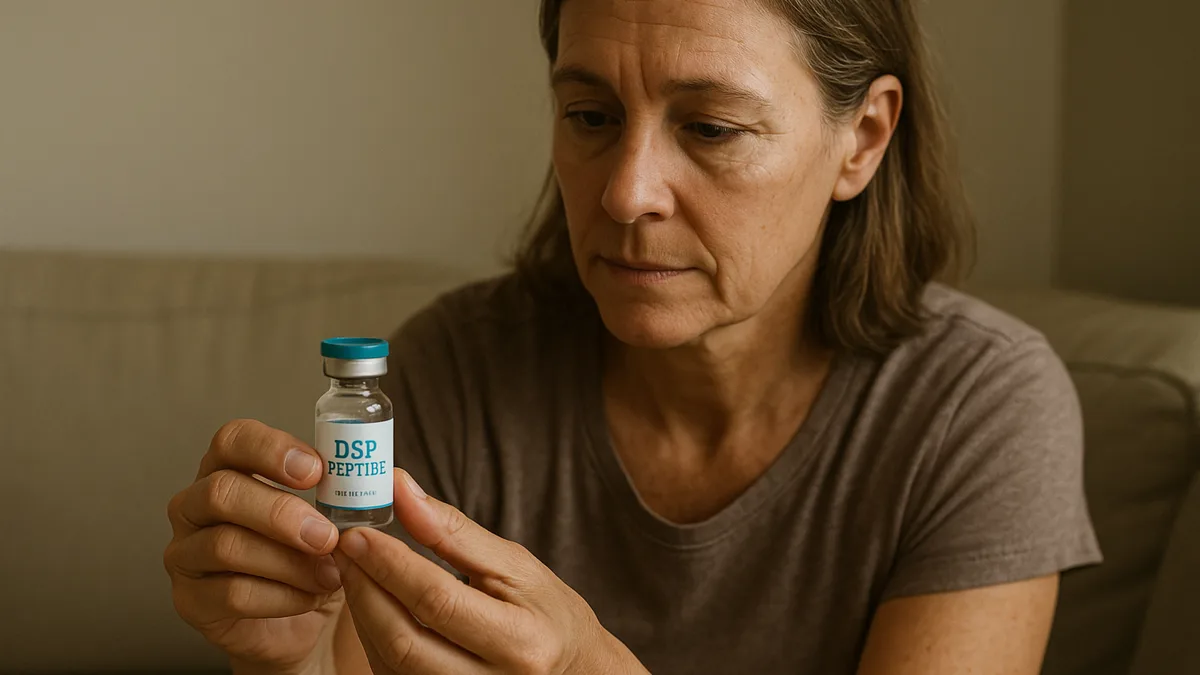
DSIP Versus Melatonin: Why Depth Matters More Than Timing
Melatonin and DSIP get grouped together often, but they are not interchangeable. Melatonin is cheap, easy to find, and reliable for shifting your body clock, yet its effect largely ends once you fall asleep. DSIP for sleep is positioned to take over from there, working on how deep and how continuous your sleep is rather than just when it starts.
The table below summarizes how the two typically compare when patients and providers weigh them side by side.
| Factor | Melatonin | DSIP |
|---|---|---|
| Primary mechanism | Regulates circadian timing signals | Interacts with GABA, dopamine, and serotonin pathways tied to sleep architecture |
| Effect on deep sleep stages | Limited direct influence | Studied for potential effects on slow-wave, delta sleep activity |
| Best suited for | Jet lag, shift work, circadian misalignment | Fragmented sleep, stress-related sleep disruption, poor sleep depth |
| Availability | Over the counter supplement | Compounded medication requiring provider evaluation |
| Regulatory status | Sold as a dietary supplement | Not FDA-approved; compounded for individual patients by licensed pharmacies |
| Typical use case | Short-term timing correction | Longer-term support for sleep quality and consolidation |
Why does this distinction matter for someone choosing between them? Melatonin's mechanism is intentionally narrow, which keeps it reliable for timing problems but limited for anything beyond that. DSIP for sleep draws research interest because it may engage the systems that decide whether rest is actually restorative, not merely whether sleep starts at the right hour. For readers who have already gotten everything melatonin has to offer, that broader mechanism is the reason to bring DSIP up with a licensed provider instead of trying yet another round of the same supplement.
5 telehealth options if you are ready to act on dsip for sleep
- 1Visit site
Biotech LifestyleOur pick
Online visits with licensed providers, transparent pricing, medication shipped from licensed pharmacies.
- 2Visit site
Victory Select
Subscription Experience physician-supervised weight loss, hormone replacement, and longevity treatments
- 3Visit site
Bridgeside
Physician-guided medical evaluation
- 4Visit site
Ellie MD
preventative healthcare more accessible and affordable
- 5Visit site
Lead West Medical
Telemedicine using HIPAA compliant and convenient healthcare options
What the Research Says About DSIP and Sleep Quality
Scientific curiosity about DSIP goes back decades, and the findings so far set it clearly apart from standard sleep aids. Early work showed DSIP could promote sleep-like states through mechanisms entirely unrelated to circadian regulation, which opens the door for people whose sleep issues do not respond to melatonin or similar compounds.
Studies measuring brain wave activity during sleep point toward specific areas of interest. Where melatonin mainly affects when sleep starts and roughly how long it lasts, DSIP for sleep appears to touch particular sleep stages directly. Areas that have drawn research attention include:
- Delta wave activity, the signature of deep, restorative slow-wave sleep
- REM sleep regulation that operates independently of the internal clock
- Sleep consolidation, meaning staying asleep without frequent waking
- Recovery sleep quality following periods of sleep deprivation or high stress
One of the more notable threads in DSIP research concerns its apparent role in sleep recovery after stress or sleep loss. Findings suggest DSIP may help restore homeostatic sleep drive, the biological pressure that builds when the body genuinely needs rest. That could make DSIP for sleep especially relevant for people whose sleep issues stem from chronic stress, irregular schedules, or accumulated sleep debt rather than a simple timing mismatch.
As with any peptide therapy, responses vary from person to person, and DSIP remains an area of ongoing investigation rather than a settled solution. Any use should happen under the guidance of a licensed provider who can track progress and adjust the plan as needed.

How DSIP for Sleep Is Used in Practice
When a licensed provider prescribes DSIP for sleep, it is typically part of a larger plan rather than a stand-alone fix. Unlike grabbing melatonin off a shelf, peptide therapy calls for medical oversight, individualized dosing, and a protocol built around a patient's specific sleep problems and health background.
Compounded DSIP is prepared by licensed pharmacies against an individual prescription. These preparations are not FDA-approved, since they are made for one patient rather than manufactured at scale. Providers considering DSIP for sleep generally look at factors such as:
- The specific sleep complaints and patterns a patient describes
- Past responses to melatonin or other sleep interventions
- Underlying health conditions that may be affecting sleep
- Lifestyle factors contributing to poor rest
- Overall treatment goals
Timing, dosing, and duration are individualized rather than standardized. Some patients use DSIP in cycles, while others build it into a longer protocol. Anyone prescribed DSIP should review injection technique and storage guidance with their provider before starting. Many patients exploring DSIP for sleep are also working on hormone balance or metabolic health at the same time, since these systems influence sleep and are influenced by it in turn, and addressing them together tends to produce steadier results than treating sleep in isolation.
Who Tends to Benefit From DSIP for Sleep
DSIP for sleep is particularly worth raising with a provider if melatonin has not produced any meaningful change. People who fall asleep without trouble but wake repeatedly, sleep lightly without reaching deep restorative stages, or feel unrefreshed despite logging enough hours in bed usually have a quality problem rather than a timing one, which melatonin was never built to solve.
People dealing with stress-related sleep disruption may also see a benefit. DSIP is thought to carry stress-modulating properties alongside its sleep effects, which could help break the loop where stress wrecks sleep and poor sleep amplifies stress. That multisystem approach is a meaningful departure from melatonin's narrower focus on circadian timing.
Athletes and physically active people sometimes look into DSIP for sleep because of its possible effects on deep sleep stages, since slow-wave sleep plays a real role in physical recovery and tissue repair. People on irregular schedules who have already exhausted what melatonin can do might also consider DSIP, since it works through pathways unrelated to circadian timing and may still offer support even when a schedule stays inconsistent.
That said, DSIP is not automatically the superior choice for everyone. Plenty of people do fine on melatonin and never need to look further. The goal is finding a provider who can assess an individual sleep pattern and recommend whichever approach, or combination of approaches, is most likely to help.
Starting a DSIP for Sleep Evaluation
If DSIP for sleep sounds like it might fill in where melatonin has fallen short, the process begins with a consultation. A licensed provider needs a full picture of sleep history, prior attempts at treatment, and overall health before recommending any peptide therapy.
For readers who want a licensed evaluation without scheduling around a waiting room, the option we point people to first is Biotech Lifestyle, where the online health profile is free to start, no referral is required, pricing is shown up front, and HSA or FSA cards are accepted for eligible treatments.
During a consultation, be ready to describe how long it typically takes to fall asleep, how often you wake overnight, how you feel on waking, and what you have already tried, melatonin included. That information helps a provider decide whether DSIP for sleep, another peptide therapy, hormone optimization, or some combination is the better fit. If DSIP is appropriate, the provider builds a protocol with specific dosing and timing, and follow-up visits allow for adjustments based on how the patient responds.
Where This Leaves Your Sleep Strategy
Good sleep is the foundation that makes nearly everything else easier, including managing weight, sustaining energy, thinking clearly, and staying emotionally steady. Chronic poor sleep quietly erodes progress in every other area of health, even when you are doing everything else right.
If melatonin and the usual approaches have not moved the needle, looking into DSIP for sleep under proper medical supervision may open a path that conventional options miss, especially when the real issue is sleep depth and architecture rather than timing. Licensed providers understand that sleep problems often connect to broader goals like hormone balance or metabolic health, so treating sleep as part of that bigger picture tends to support progress across several fronts at once. For readers ready to have that conversation, Biotech Lifestyle pairs the visit with transparent pricing and pharmacy-prepared medications built around an individual evaluation rather than a one-size-fits-all bottle off the shelf.